
Hydraulic Hammers

How Often Should I Service My Hydraulic Cylinders in Florida?

In the demanding industrial landscape of Florida—from the humid Everglades to the salt-misted coasts of Miami and Jacksonville—your equipment faces unique challenges. One of the most common questions fleet managers and operators ask is: How often should I service my hydraulic cylinders? While a general rule of thumb exists, the Florida climate dictates a more rigorous approach. In this guide, we break down the maintenance intervals, the “Florida factor,” and the warning signs you cannot afford to ignore. The Standard Maintenance Interval Under ideal conditions, most experts recommend a professional inspection and service every 1,000 to 2,000 operating hours or at least once a year. However, “ideal conditions” rarely exist in the Sunshine State. Why Florida’s Climate Changes the Rules Florida is one of the most punishing environments for hydraulic systems. If your operations are based here, you must account for these three factors: Key Signs Your Cylinder Needs Immediate Service Waiting for a scheduled interval can be a costly mistake. If you notice any of the following, service is required now: Preventative Maintenance Checklist (The Florida Protocol) To extend the life of your cylinders between professional services, follow this routine: Task Frequency Why it Matters Visual Inspection Daily Detects leaks and rod damage early. Rod Cleaning Weekly Removes salt and abrasive dust common in FL. Fluid Analysis Every 500 Hours Checks for water/moisture contamination. Filter Replacement Per Manufacturer Prevents debris from circulating through the cylinder. The Bottom Line: Proactive vs. Reactive In Florida, a Proactive Maintenance Program typically costs 60% less than a “Run-to-Failure” approach. Servicing your hydraulic cylinders every 1,200 hours in this environment is the sweet spot for preventing catastrophic downtime.

How Often Should I Service My Hydraulic Cylinders in Florida? Read More »
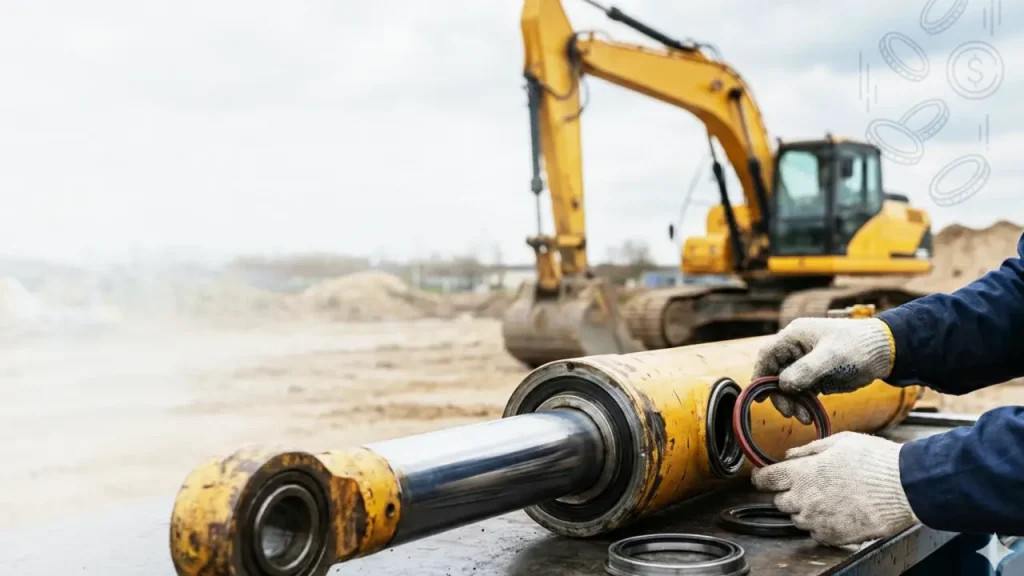
Equipment Down, Money Lost: How to Reduce Hydraulic Cylinder Repair Time

In the construction and mining industries, time isn’t just gold—it’s operational continuity. An excavator, bulldozer, or dump truck sidelined by a hydraulic system failure can result in thousands of dollars in losses per day. Hydraulic cylinder repair is often perceived as a slow process, but the reality is that with the right strategy, you can minimize downtime and get your equipment back to work in record time. The True Cost of Downtime in Heavy Machinery When we talk about “downed equipment,” the cost isn’t just the repair bill. You must also factor in: Idle operator wages. Project schedule delays and potential contractual penalties. Rental costs for emergency backup equipment. This is why accelerating hydraulic cylinder maintenance is a top financial priority for any fleet manager. Key Strategies to Reduce Repair Turnaround Time 1. Predictive Diagnosis and Warning Signs Don’t wait for the cylinder to fail completely. Identifying minor leaks, scored piston rods, or unusual noises allows for scheduled intervention. Preventive maintenance will always be faster and cheaper than an emergency repair caused by a catastrophic failure. 2. Strategic Stock of Seals and Repair Kits 60% of delays in hydraulic shops are due to waiting for parts. Working with experts who maintain an extensive inventory of hydraulic seals, gaskets, and critical components reduces wait times from days to mere hours. 3. Partnerships with Specialized Workshops Taking your component to a general mechanic can be a costly mistake. To reduce turnaround time, you need a specialized hydraulic power center that features: Hydraulic test benches to verify the repair under pressure. In-house cylinder honing and machining capabilities. Expertise in leading brands like Caterpillar, Komatsu, or John Deere. Repair vs. Replace: Making the Right Call One of the biggest time-savers is knowing when a cylinder is no longer salvageable. Repair: Ideal when damage is limited to seals, joints, or light rod scratches. Replacement: Necessary when there is structural deformation in the barrel or when the reconstruction cost exceeds 70% of a new part with immediate availability. At Ingetec1020, we prioritize a rapid technical evaluation to provide an honest answer that protects both your budget and your schedule. How to Optimize the Shipping Process to the Shop To ensure an express construction equipment repair, follow these steps before sending us the cylinder: Clean the component: This facilitates immediate visual inspection upon arrival. Document the failure: Note if the issue is a loss of power, an external oil leak, or slow cycle times. Identify the model: Have the machine’s identification plate or part number ready to speed up the search for OEM replacement parts. Conclusion: Your Partner in Productivity Reducing repair time isn’t about rushing the job; it’s about precision engineering. At Ingetec1020, we understand that every hour counts. Our technical service is optimized to offer durable solutions in the shortest time possible, ensuring your investment is back where it belongs: on the job site. Is your equipment stuck right now? Contact Ingetec1020 today and request a priority diagnostic for your hydraulic cylinders. Let’s get your machinery moving again!

Equipment Down, Money Lost: How to Reduce Hydraulic Cylinder Repair Time Read More »